Not every large breach starts with a clever exploit. In this one, according to a notice filed with Massachusetts regulators and reported by ISMG, an unauthorized person posed as a Marathon Health IT worker, obtained an employee's credentials, used them to get into a cloud-hosted application, and exported information. Marathon Health, which provides workplace health care for employers and public-sector organizations, discovered the activity on August 24, 2026. This week it was reported to affect nearly 5.7 million people.
The chain, step by step
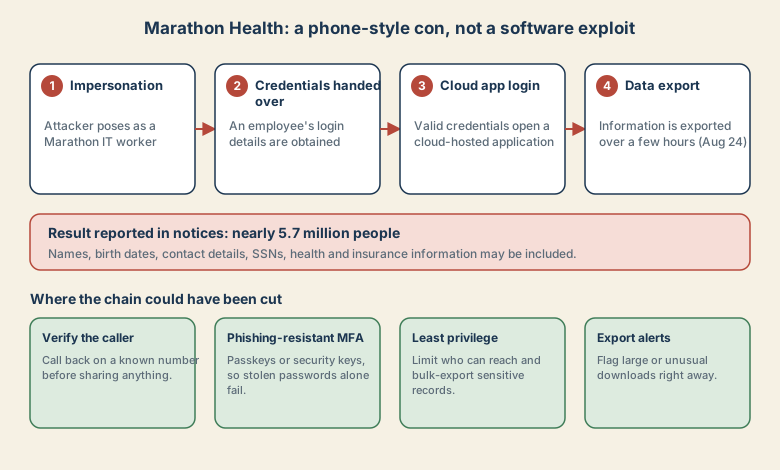
- Impersonation. The attacker claims to be from internal IT.
- Credentials handed over. An employee provides login details.
- Cloud login. Valid credentials open the application. No malware is needed, and there is no "hack" in the traditional sense.
- Data export. Information is exported, in this case over a few hours.
The notice does not describe the channel used for the impersonation, so we will not guess. The pattern, though, is familiar: attackers contact staff or help desks, pretend to be colleagues, and ask for access.
Why healthcare and cloud apps are attractive
Healthcare organizations hold names, Social Security numbers, insurance data, and medical details in one place. That combination is valuable for identity theft and fraud, and it cannot be changed like a password. Cloud applications make access easy for staff, and just as easy for anyone holding valid credentials.
Four controls that cut the chain
- Verify the caller. Staff should end the conversation and call back on a known internal number before sharing anything. IT should never ask for a password.
- Use phishing-resistant MFA. Passkeys and hardware security keys are tied to the real website, so a stolen or spoken code is not enough.
- Apply least privilege. Few people should be able to reach, and bulk-export, sensitive records.
- Alert on exports. A large download from a new location should raise an alarm in minutes, not months.
If you received a notice
- Treat unexpected calls and emails about the breach with caution. Use the phone number in the official letter or on the organization's website.
- Consider a credit freeze or fraud alert with the credit bureaus, which is free in the US.
- Check explanation-of-benefits statements for services you did not receive.
- Be alert for phishing that mentions the breach by name.
If you run IT
Write the call-back rule into policy, test it with a drill, and make sure staff know who to report suspicious calls to without fear of blame. Then check which accounts can export data in bulk.
Sources
- Marathon Health Hack Could Affect Nearly 5.7 Million (Bank Info Security / ISMG)
- Marathon Health notice to Massachusetts regulators (mass.gov)
Reported as of November 5, 2026. Figures may change as notifications are filed.